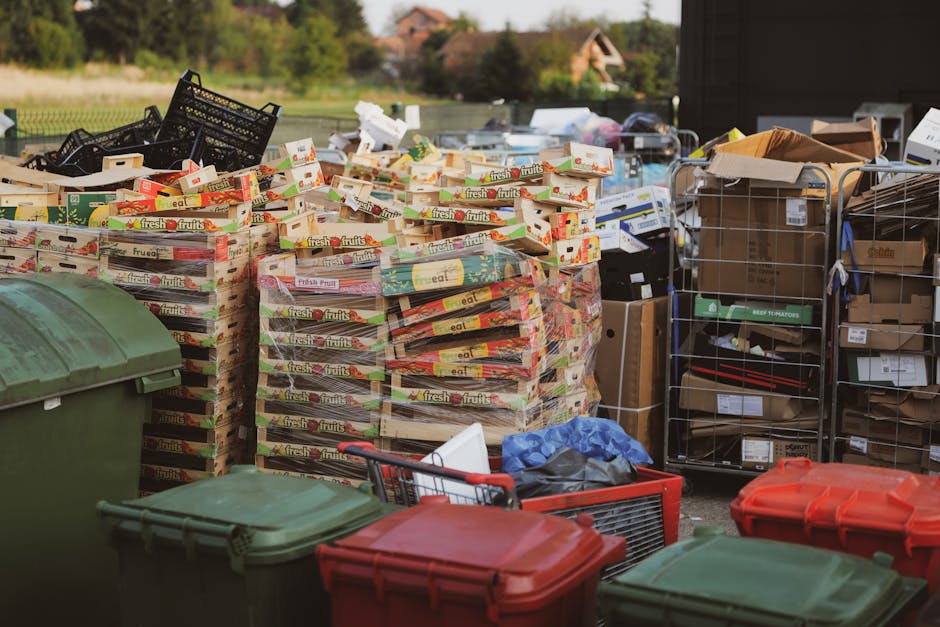
Bentall Centre bulky rubbish collection in Kingston

If you are dealing with bulky rubbish at or around Bentall Centre, you probably want the same three things: a quick turnaround, a tidy result, and no drama with access, parking, or disposal rules. That sounds simple enough. In practice, large items like broken office chairs, shop fittings, shelving, packaging waste, or old furniture can become a real headache very quickly, especially in a busy Kingston location where people, deliveries, and tight time windows all seem to collide at once.
This guide explains how Bentall Centre bulky rubbish collection in Kingston typically works, what to think about before booking, and how to avoid the sort of mistakes that lead to delays or extra cost. It also covers practical options for businesses, landlords, contractors, and anyone clearing larger items from a commercial space. Let's face it, bulky waste is rarely glamorous. But handled properly, it becomes one of those jobs that is surprisingly straightforward.
For readers who want to explore the wider service options behind a bulky waste clear-out, useful supporting pages include general waste removal, furniture disposal, office clearance, and pricing and quotes.
Why Bentall Centre bulky rubbish collection in Kingston Matters
Bulky rubbish is not just "more rubbish". It is usually awkward rubbish: too large for standard bins, too heavy to move casually, and often inconvenient to store while you wait for the next collection day. Around Bentall Centre, that inconvenience is amplified by the pace of the area. There are public walkways, business entrances, loading constraints, and a constant flow of foot traffic. If an item is left in the wrong place, it can quickly become a safety issue or an eyesore.
There is also a reputational side to this. A retail unit, office, or managed premises that looks cluttered gives the wrong impression. Customers notice. Staff notice too. And if you are preparing a unit for handover, refurbishment, or a change of use, a clean clear-out helps everything else move faster. Truth be told, the last few unwanted items often take the longest to deal with because they are the hardest to shift and the easiest to leave "for later".
Good bulky rubbish collection keeps the process organised. It helps separate reusable items, recyclable materials, and waste that needs special handling. It also reduces the chance of fly-tipping, damage to common areas, or wasting staff time on manual lifting. That is especially important in a mixed-use environment where one badly managed load can affect several people at once.
Expert summary: If the waste is large, heavy, or awkward to move, it usually pays to plan the collection as a proper logistics job rather than a quick throw-out. That mindset saves time, protects access routes, and avoids the "we'll just move it later" trap.
How Bentall Centre bulky rubbish collection in Kingston Works
In most cases, the process is simple once the right details are clear. You describe what needs removing, how much there is, and where it sits. Then the collection can be planned around access, timing, and any site constraints. If the load includes mixed items, someone should check whether anything needs separate handling, such as electricals, fridges, or potentially hazardous waste.
For bulky rubbish near Bentall Centre, the logistics matter as much as the waste itself. A collection team may need to work around restricted loading access, lift availability, building management rules, or time slots that avoid customer peaks. If the waste is inside a unit, the team may also need to consider stairways, narrow corridors, or floor protection. You will notice very quickly that a little planning makes the actual removal much smoother. No heroics required.
Businesses often compare bulky rubbish collection with a few adjacent services. For example, a shop refit may also involve builders waste clearance, while an office move may involve office clearance or confidential shredding for sensitive paperwork. A mixed job is normal, not unusual.
There is usually a clear sequence:
- Identify what needs removing and what must stay.
- Check access, floor level, parking, and any on-site restrictions.
- Confirm whether items can be lifted as-is or need dismantling.
- Book a time that suits the site and reduces disruption.
- Have the waste ready and separated where possible.
- Complete the collection and dispose of materials responsibly.
That sounds basic, and it is. But the best bulky waste jobs tend to be the ones with the simplest prep.
Key Benefits and Practical Advantages
The main benefit is obvious: large, awkward items disappear without you having to wrestle them through a busy site yourself. But there are a few less obvious advantages worth calling out.
- Less disruption: A planned collection reduces noise, clutter, and staff downtime.
- Better safety: Heavy lifting and awkward manoeuvres are common causes of avoidable accidents.
- Cleaner handovers: If you are vacating or reconfiguring a unit, a proper clear-out helps the next stage run on schedule.
- More usable space: That storage corner, back room, or dead area becomes useful again.
- Improved sorting: Reusable, recyclable, and non-recyclable materials can be separated more sensibly.
There is also a practical cost angle. Not every bulky item needs the same treatment. A small load of broken chairs is very different from a full office strip-out. Choosing the right approach can avoid overpaying for unnecessary capacity or under-planning a job that turns out larger than expected.
If you are considering a wider clearance rather than a single-item lift, nearby service pages such as furniture clearance, mattress and sofa disposal, and fridge and appliance removal may help you match the right solution to the waste type.
Who This Is For and When It Makes Sense
Bentall Centre bulky rubbish collection in Kingston is relevant to a surprisingly wide group of people. It is not just for large commercial refits. In day-to-day reality, it helps whenever an item is too big, too heavy, or too awkward for routine bins and standard handling.
Typical users include:
- retail teams clearing old display units, shelving, or damaged stock fixtures
- office managers dealing with chairs, desks, cabinets, and packaging waste
- landlords or agents preparing a unit for end-of-tenancy handover
- contractors removing non-structural waste after refurbishment
- facilities teams keeping common areas, back-of-house space, and stores rooms clear
- local businesses that need a one-off uplift rather than ongoing waste collection
It also makes sense if you are trying to avoid clutter building up over time. A lot of premises do not become messy all at once; they become messy by accumulation. One old sofa. Two broken chairs. A stack of redundant packaging. Before long, the back room starts feeling smaller and the team starts stepping around things. That is when action is overdue.
Sometimes the trigger is practical, sometimes it is visual, and sometimes it is just common sense. If an item is blocking access, taking up rentable space, or making the place feel untidy, it has already become a problem worth solving.
Step-by-Step Guidance
Here is a straightforward way to approach bulky rubbish collection without overcomplicating it.
- Walk the site first. Check what is actually going, what is staying, and whether anything needs dismantling.
- Separate the obvious categories. Put furniture, electricals, general mixed waste, and reusable items into rough groups if you can.
- Measure anything awkward. Large cabinets, shop fittings, or bulky appliances may need door-width checks or partial dismantling.
- Think about access routes. Lifts, stairwells, loading bays, and ground-floor entrances all matter.
- Prepare the area. Clear a path, protect floors if needed, and make sure staff know when the collection is taking place.
- Confirm any special items. Fridges, freezers, screens, and hazardous materials may need separate handling.
- Book the collection at a sensible time. Early morning or quieter periods are often easier in busy commercial settings.
- Do a final sweep. Before the team leaves, check for small items tucked behind counters, under desks, or in corners.
That final sweep matters more than people think. It is always the last corner, the one by the skirting board, where a forgotten pile seems to hide. A tiny bit of attention there saves a second visit.
If your waste includes renovation debris, it may help to read up on what belongs in a more general clearance via what can go in a skip. Even if you are not using a skip, the material rules and separation logic still help.
Expert Tips for Better Results
In our experience, bulky rubbish jobs go best when the person organising them thinks like a site manager, not just a remover of waste. A few small habits make a real difference.
- Photograph the load before collection. Not for vanity - for clarity. A quick set of photos helps avoid misunderstandings about volume and access.
- Keep the path clear from the start. If the route is blocked by stock or packaging, movement slows down fast.
- Stack items safely. Flat-on-flat is better than wobbling towers. Nobody wants a collapsing pile in a corridor.
- Ask whether dismantling is worth it. Sometimes taking a cabinet apart saves more time than forcing it through a narrow doorway whole.
- Plan around building activity. If deliveries, customer peaks, or trade work are happening, the collection should fit the site rather than fight it.
- Sort before the uplift if possible. Recyclable metal, wood, cardboard, and mixed waste are easier to manage when they are not all tangled together.
A small but useful habit is to label keep items clearly. Tape on a shelf, a note on a box, or even a bright marker line can stop useful stock from being removed by mistake. Sounds obvious, but it happens. More than you'd think.
If you are handling a broader commercial clean-up, the pages on business waste removal and recycling and sustainability are worth considering because bulky waste is often part of a wider waste strategy, not a standalone job.
Common Mistakes to Avoid
Most bulky waste problems come from poor planning rather than the waste itself. The good news? That makes them easy to prevent.
- Leaving the load until the last minute. This usually creates access issues and puts pressure on everyone.
- Not checking item categories. Mixed waste can hide items that need separate handling.
- Assuming everything is simple to move. A heavy desk or a two-piece cabinet can turn awkward in a narrow corridor very quickly.
- Forgetting about building rules. Some premises have strict time slots or access requirements that need to be respected.
- Ignoring floor protection. A dragged item can scratch floors or damage thresholds. Not ideal when the place has just been cleaned.
- Failing to confirm final quantities. An underestimated load can delay removal and complicate pricing.
One of the sneakiest mistakes is poor communication between teams. The office thinks the store team has sorted the waste. The store team thinks facilities is handling it. Everyone assumes someone else has done the job. Then Friday arrives, and there it all is. Waiting.
Another common slip is keeping items "just in case" for too long. If something is genuinely redundant, it should move on. Otherwise the back room becomes a museum of maybe-useful things. And museums, as we know, are not usually where you want your old filing cabinets.
Tools, Resources and Recommendations
You do not need a complicated toolkit for a bulky rubbish collection, but a few basic items help keep things orderly.
- Hand truck or dolly: useful for heavier items and short internal moves.
- Work gloves: sensible for protecting hands from splinters, sharp edges, and dusty surfaces.
- Labels or tape: handy for marking keep, remove, recycle, or dismantle.
- Measuring tape: useful for doors, lifts, and awkward furniture.
- Camera phone: good for documenting the load and access conditions.
- Floor protection: cardboard or purpose-made coverings can help on sensitive surfaces.
In terms of services, the most relevant supporting pages are often house clearance and home clearance if the waste is domestic-style, or garage clearance and loft clearance for stored items that have built up over time. The labels sound residential, but the logic is useful in commercial settings too: sort, remove, and leave the space usable again.
For very large units or a full strip-out, builders waste clearance is often the better fit because it aligns better with mixed demolition debris, packaging, and bulky construction remnants.
Law, Compliance, Standards, or Best Practice
Any bulky rubbish collection should be handled with sensible care around duty of care, safe lifting, and appropriate disposal routes. In the UK, businesses are generally expected to manage waste responsibly and to ensure it goes to an authorised destination. You do not need to become a legal specialist to do that well, but you do need a basic process.
Best practice usually includes:
- confirming what the waste contains before removal
- separating hazardous or restricted items where necessary
- using safe manual handling methods for heavy objects
- keeping access routes clear to reduce trip and impact risks
- making sure the collected waste is taken to a legitimate disposal or recycling route
If the load includes fridges, chemicals, oils, batteries, sharps, or other potentially hazardous items, it should be treated with extra caution. Those materials are not something to "just pop out with the rest". That route leads to trouble, and nobody needs that on a busy site.
It is also sensible to review insurance and site safety expectations before any collection. If a team is moving items through public-facing areas or shared corridors, then protecting people and property is part of the job, not an optional extra. You can read more about that approach through insurance and safety and health and safety policy.
Options, Methods, or Comparison Table
There is more than one way to clear bulky rubbish near Bentall Centre. The right method depends on volume, timing, item type, and how much disruption you can tolerate.
| Method | Best for | Pros | Trade-offs |
|---|---|---|---|
| Bulky rubbish collection | Large one-off items, mixed bulky waste, quick clearances | Fast, flexible, less manual effort for the client | Needs clear access and accurate item description |
| Skip-style approach | Regular or larger volumes of mixed waste | Useful for ongoing work, straightforward containment | Requires space and the right waste mix |
| Dedicated clearance service | Full rooms, units, or larger contents clear-outs | Good for bigger jobs and more sorting | May be more than you need for a small load |
| Item-specific disposal | Single appliances, sofas, mattresses, or furniture | Efficient when the waste type is clear | Less efficient if the load is varied |
There is no single "best" method. If the space is tight and the timeline is short, a targeted collection may be the most sensible choice. If the job has grown into a bigger clear-out, a broader service can be calmer and more efficient. Simpler is usually better, though not always smaller.
Case Study or Real-World Example
Here is a realistic example. A small retail unit near Bentall Centre is being refreshed ahead of a new layout. The team has old display shelving, damaged stock storage, two office chairs, some boxed packaging, and a fridge that no longer works. Nothing dramatic. Just the sort of mixed clutter that slowly builds up during a busy trading period.
The manager first separates what can stay, what can be reused, and what must go. The shelving is checked to see whether it needs dismantling. The fridge is flagged so it can be handled as a separate appliance item. The loading route is reviewed so nothing blocks customer movement or staff entrances. Collection is booked for an early slot, before the shop fully opens.
On the day, the team clears the back area first, then moves the larger items through the shortest route. The packaging and loose waste are gathered last so the floor can be swept properly at the end. The whole process is neat, unflashy, and done without disrupting the trading day. That is what good bulky rubbish collection looks like when it goes well. Not glamorous. Just efficient, calm, and finished.
Had the fridge been mixed in with general waste without a plan, the job could have been messier. Had the shelving dimensions not been checked, a doorway problem might have popped up halfway through. Small details. Big difference.
Practical Checklist
Use this quick checklist before arranging Bentall Centre bulky rubbish collection in Kingston:
- Identify every item that needs removing.
- Separate items to keep, recycle, reuse, or dispose of.
- Check whether anything is heavy, sharp, hazardous, or electrical.
- Measure the biggest items and any tight access points.
- Confirm loading bay, parking, or site access arrangements.
- Protect floors and clear a safe route.
- Tell staff or building management when the collection is happening.
- Group similar items together where practical.
- Double-check that nothing important is left in drawers, shelves, or cupboards.
- Review the wider waste plan if the job is part of a bigger clearance.
Practical tip: If you are unsure whether an item needs special handling, pause and check before moving it. That one minute can save a lot of frustration later.
Get a free quote today and see how much you can save.
Conclusion
Bentall Centre bulky rubbish collection in Kingston is really about making a difficult job feel organised. When large items are removed with a plan, you save time, reduce risk, and keep your site looking professional. That matters whether you are managing a retail refresh, an office change, or a one-off clear-out that has simply gotten out of hand.
The best results usually come from clear preparation, sensible sorting, and honest communication about what needs moving. Nothing fancy. Just a steady, practical approach that respects access, safety, and the realities of a busy Kingston location. If you get those things right, the rest tends to fall into place.
And once the bulky stuff is gone, the space feels different. Quieter. Lighter. A bit easier to breathe in, even. That is often the real payoff.
Frequently Asked Questions
What counts as bulky rubbish in a Bentall Centre collection?
Bulky rubbish usually means large or awkward items that do not fit standard bins or routine waste streams. That can include furniture, shelving, cabinets, display units, broken office items, and some appliances.
Can bulky rubbish be collected from inside a unit?
Yes, in many cases it can. The important part is access. Door widths, lifts, stairs, and protection for floors or walls all need to be considered before the job starts.
Do I need to separate recycling before the collection?
It helps if you can, especially for materials like cardboard, metal, wood, and reusable furniture. Even a rough sort makes the collection smoother and can improve the overall waste handling process.
What happens if my bulky items include electricals?
Electrical items often need separate handling. Fridges, freezers, screens, and similar appliances should not be treated the same way as ordinary furniture or mixed waste.
Is bulky rubbish collection suitable for a shop refit?
Yes. It is a very common choice for refits because it handles awkward items quickly and helps free up space for new stock, fixtures, or works.
How do I avoid delays on the day of collection?
Prepare the items in advance, make the access route clear, and confirm any site restrictions beforehand. The smoother the handover, the faster the removal tends to go.
Can bulky rubbish collection be combined with other clearance work?
Often, yes. It may be combined with office clearance, furniture disposal, builders waste clearance, or a broader waste removal job if the site needs more than one type of service.
What should I do with items I want to keep?
Separate them clearly and label them if needed. A bright note or tape marker works better than "I'll remember that later". To be fair, later is when mistakes happen.
Are there any items that need special care?
Yes. Hazardous materials, fridges, chemicals, batteries, and some electronic waste can require specific handling. If you are unsure, it is better to check before moving the item.
How far in advance should I arrange the collection?
As early as you can, especially if access is limited or the collection needs to fit around trading hours. A bit of lead time makes scheduling much easier.
Is bulky rubbish collection only for businesses?
No. While it is especially useful for commercial sites around Bentall Centre, the same practical approach can help in flats, homes, garages, and lofts where large items have built up.
Where can I find more information about the company and its policies?
You can review the company's background on the about us page, and for service expectations there are useful pages covering terms and conditions, payment and security, and complaints procedure.